Monday, 13 April 2020

Top Ten Games Of The Wilder Era (So Far)

Football's been postponed for just over a month, but it feels a lot longer, probably because Sheffield United have been doing so well! Pushing for Europe, on the brink of an FA Cup quarter final and going toe-to-toe with big clubs on our own terms, it's been quite a season. Business as usual for Wilder and Knill, frankly.

With that in mind, I thought now was as good a time as any to take a look at the last three and a bit seasons and pick out some of the best games we've enjoyed under Chris Wilder's stewardship. I had to cut out some good results, big away days and major upsets to curate this top ten, which shows how good we've had it since summer 2016. Here's ten great games to make you miss football even more than you already are:

10: Northampton (H) 2016

This is a bit of an editor’s choice. The last fixture of 2016 saw Chris Wilder come up against his former club, and climb to the summit of League 1 for the first time. A crisp New Year’s Eve in Sheffield had us celebrating more than the arrival of 2017 after this victory. This game was at the latter end of an extraordinary run of 21 league matches in which The Blades only lost once. This time they could just manage a single goal in the 89th minute, the 1-0 scoreline hiding the dominance Sheffield United enjoyed in that game.

The first four games of the season had left us rock bottom on a single point, which is why it felt so monumental when we finally made it to the top. Sheffield United would stay there for the rest of the season, and despite a couple of blips here and there, entirely dominated the league in the way we’d hoped to see since relegation five years before. This game was important as it signalled the end of the first stage of the Wilder and Knill Project. It was the symbolic end to the struggle. We had built the solid base on which to mount our title push.

9: Manchester United (H) 2019

Lys Mousset here, pictured shortly after murdering Phil Jones.

Promotion to the Premier League has many exciting prospects for fans, but one thing I was particularly interested in was how we’d fare against the big teams. Would playing against world-class stars like Sergio Aguero, Mo Salah and Harry Kane be too much for our lower league mercenaries? As it stands, we’ve had a respectable record against the Big Six so far, and haven’t yet compromised the attractive attacking imprint of football Wilder and Knill have stamped on the club’s psyche.

This was one of the most entertaining fixtures we’ve participated in this season, described as a topsy-turvy game by the press. In fact it was defined by seven minutes just after the hour mark, where Manchester United punished us with three goals to stun the stadium, and overturn the handsome lead The Blades had given themselves. Oli McBurnie’s late equaliser was all we deserved after fighting so hard.

The best I’ve felt all season so far was on 52 minutes, when Lys Mousset latched on to Fleck’s through ball and produced a clinical finish from just outside the area to beat David De Gea, and send Sheffield United 2-0 up. This was an incredible moment - We were leading at home to one of the biggest clubs in the world, and we were running the game. That was the peak of our early season; it was the game where English football sat up and took notice of what’s happening in Sheffield. A special night to remember under the lights at Bramall Lane.

8: Aston Villa (H) 2018

This one’s another personal favourite of mine, during that irresistible period at the start of last season where the Blades were flying through their home fixtures. Villa eventually got promoted of course, after a surge up the table got them to the play-offs. But at this time, they were flirting with relegation, and Sheffield United were merciless in their dismantling of Steve Bruce’s side.

This was Sheffield United’s fourth successive league victory, and with four different scorers drawn from all positions on the field, this was an exemplary win for Wilder and Knill’s focus on teamwork. No position is more important than another in their system, and to win games, the first XI need to operate as a unit. Sheffield United were truthfully out of sight at half time, but the pick of the goals was Sharp’s wicked half-overhead finish just after the restart. Villa rarely threatened, and their consolation on the hour mark brought an ironic “We’re gonna win 5-4” chant from the away end.

Six games into the season, to have such a well-established side as Aston Villa so roundly beaten was a luxury. It was a sign of things to come, a show of what this team was capable of at full stretch. In a season of great accomplishments, this still stands out as one of the top victories.

7: Bournemouth (A) 2019

The first game in the top flight. All summer we’d waited for the fixture list, and when this got confirmed it was arguably the best start we could hope for - Away at a mid table side, with a small stadium on the south coast. A seaside trip in August for barely 1,000 supporters. An exclusive feel it must have been to anyone in the away end that day.

In truth it was an average game, but for that one great moment. Billy Sharp, our club captain and talismanic driving force throughout this era found himself with an inch of space in the box. He struck it like you’d expect; quickly, with little grace and from about five yards out. A quintessential Sharp goal. He’d been on the pitch for six minutes, but had already left his mark on the game. The fans were beside themselves as he ran towards them, the rest of the squad flanking him in a show of joy and togetherness. Sheffield United were back.

6: Peterborough (A) 2017

This will have lots of people smiling at just the sound of those two words. Peterborough away. Even if you don’t say which year, everyone knows which game you mean. It’s already renowned in Blades folklore. Coming in the final third of the season, this win put us five points clear at the top of the table.

I suppose what makes this such a fond memory is that it was the first game where we started to accept that we could actually get promoted. After so many disappointing non-starters and false dawns, no-one wanted to jinx what was happening. But after this win away at a tough side, the tide of opinion started to shift. We allowed ourselves to start believing.

The Blades had pushed and fought all game, squandering a handful of chances. It took Sharp’s late goal for the result to be sealed, bringing a tidal wave of ecstasy from the travelling fans, (and a couple of stragglers onto the pitch). Billy had scored the goal right in front of the away end, and wheeled towards the heaving mass of supporters who, five minutes beforehand, will have thought the game was going to fizzle out. Not so, for Wilder’s never say die Sheffield United team. As with many games that season, we fought to the end, and received our deserved victory, even if it did take until the 87th minute!

5: MK Dons (A) 2017

Just a few beers with the lads, nothing too mad.

This was the peak of the end-season rampage we enjoyed after promotion was secured. When you have a season like this, finishing 14 points clear of 2nd and getting promoted with four games to spare, it’s something special. Those final fixtures are a parade of glory, they are consequence-free pageants of life and colour. This game was pure celebration, with nothing at stake whatsoever. You could say the same about every game near the end of that season. We were truly spoiled in April 2017.

In the League 1 years, I’d make a point of looking for the final away fixture. Thinking, if we get promoted, that’s where it could happen. There could not have been a better venue for this than Stadium:MK, even if that name looks like a crappy deodorant brand from the 90s. 7,000 Sheffield United fans made the trip to Buckinghamshire, and the atmosphere was incredible. Because it was a new stadium, fairly large, and south of Sheffield, this felt similar to a Wembley trip. But unlike those play-off losses or semi-final disappointments, we knew we’d already won. With balloons floating up to the heavens, beach balls being thrown around and flags everywhere, the away end was one big party for two hours.

Top that off with the anarchic half time shenanigans in the concourse, and this was a memorable day for all involved. The Blades were invincible on the pitch that afternoon. They won the game 3-0, but that was by-the-by, an academic curio in the grand scheme of things. The league title and promotion had been sewn up by then. Psychologically the players were on another planet with the confidence they must have felt that day, and victory was the safest bet all season.

4: Leeds United (A) 2019

Look at those gutted  Leeds players in the background. Lovely stuff.

If there’s one thing you can guarantee with Wilder, it’s that he’ll always turn up for the big derby games. He has an unbeaten record against Wednesday (more on that later) and already has defeated Leeds United three times. Though all three of these victories were important ones, the most recent is also the most special. While this game didn’t decide anything, it was a watershed moment for the season. It was the first time many of us started to believe that Sheffield United would go up from The Championship at the second time of asking.

We all know how this goes, don’t we? With little flair but plenty of passion on the pitch, this was a game for the fans, and not for the casual observer. A robust, defensive performance kept the hosts at bay, and even though they pushed to find an opener, it was goalless at the break. You may have forgotten that Basham was playing further forward than he would do usually, occupying a midfield position that would prove critical. When Billy Sharp pounced on the ball and charged into a break, the former Newcastle man found himself running up the pitch alongside him, (“Basham’s arriving!”) and before we knew it, he had the ball just outside the box and was staring down the keeper.

Have you ever seen Chris Basham in that position before or since? Nevermind. Ping. He hit it first time and burst the back of the net, falling over in the process. The away end exploded as he ran to celebrate in front of the crowd, sliding on his belly to top off one of the most cherished goals of the Wilder era. That result was Sheffield United’s 7th clean sheet in a row, and meant they leapfrogged Leeds into 2nd. After the game Wilder made the observation that they played badly but still managed to win. That’s what was important about this game - Wilder’s Blades showed they can win ugly.

3: Ipswich (H) 2019

This game could have been irrelevant if things hadn’t turned out right for us. A couple of weeks before, we’d drawn at home to Millwall, which had us three points behind Leeds United with four games remaining. It looked like the cursed play-offs again, until a dramatic capitulation from our rivals over the Easter weekend saw a overturn in fortunes. All of a sudden, there it was - We went into this game knowing that a victory would all but hand Sheffield United automatic promotion to the Premier League.

A 5.30pm Saturday TV slot ensured that the crowd was hyped, and the eyes of the world would be watching Sheffield United take a giant leap towards returning to the top flight for the first time in 12 years. Scott Hogan put The Blades ahead in the first half, but it was Jack O’Connell who stole the show, putting the result out of sight with a powerful header, seconds after coming on the pitch and running on to meet an inswinging corner. Bramall Lane rocked as the home fans rose to their feet with the loudest and longest chorus of Jack O’Connell’s Magic, casting off the shackles of doubt and accepting that the dream had come true. Two promotions in three seasons? If you insist, Mr Wilder.

Sheffield buzzed all the night through, the party spanning out for hours and bumping up against the dawn. There was unfinished business the following afternoon, and many sore heads ventured to the pub to watch Leeds fail to beat Aston Villa and confirm the virtual certainty from the day before. Pints were raised, corks were popped, and hands were shook. The Blades were back in the big time.

2: Northampton (A) 2017

A legendary shot!

What a bright, sunny afternoon for a game of football. This lager-soaked, full-throated day of joy, relief and glory. It’s Fleck bundling home on 88 minutes, it’s the triple pitch invasion, it’s Sharp being carried along, scarf aloft and victorious. The years of setbacks, the hard work of the season, the disappointments that had come so many times before, they were all worth it for this triumph. Sheffield United would have been promoted that day even if they lost 5-0, but the fightback from 1-0 down to win it in the last few minutes gave us something to shout about. If results had gone our way we’d have been promoted at home a few days before - But to clinch it on an away day Saturday made more sense. It was this generation’s Leicester City or Darlington.

The team coach pulled in to Bramall Lane a few hours after the game, with Wilder, already half drunk and jubilant, leading the chants in the car park with the throng of supporters that greeted the team’s arrival. London Road had been at a standstill since the result, with many Blades fans staying in the city to watch the game from the beamback finding a place to celebrate a stone’s throw from the stadium. The memories, though only three years old are already hazy, and outshone by some bigger results. But it’s my hope that no matter how far we go under Wilder, that you all don’t forget how it felt that day.

This was the pinnacle of the season. Though the title was confirmed a few games later, it had nowhere near the This Is A Moment To Savour sheen to it. We announced our League 1 title as a footnote, but our promotion to the 2nd tier came as a volcanic eruption. If you were one of the proud few in the away end, or camped on that little hill that overlooks Sixfields, I hope you soaked it all in. I hope you cheered as Chris Wilder conducted a speech from the dugout. I hope you slapped the lads on the back as they escaped down the tunnel. These are the thrills we buy into the culture for, so we can look back with nostalgic eyes and say “Yeah. Reight day that, wont it!”

1: Sheffield Wednesday (A) 2017

How many times have you watched this goal?

Could it be any other game? How many wonderful memories we have from a Sunday afternoon already etched into Blades history. It was the derby victory of a generation, the statement to confirm United’s supremacy as the biggest team in Sheffield. It was 90 minutes of elation, with so many great moments to enjoy. 2-0 up after 15 minutes? A luxury final goal to seal it? That shot of the owl mascots looking sad? What a day. But it all boils down to a couple of minutes in the 2nd half...

Mark Duffy’s goal. From initially setting up the play, to the double shimmy on the defender to get some space and the acute-angled strike, (giving Danny Higginbotham the chance to bring out that well-worn commentary trope - “He’s got no right to score from there!”) it was a technically brilliant goal. But to ignore the context is criminal. Wednesday had it tied up to 2-2. They had come back, and were in the ascendancy. Their fans were doing that daft bouncing nonsense they do. They held their joy for a slender few grains of sand through the hourglass, and then it came. Washing over Hillsborough with silence, with dejection, all apart from the sonic boom from the Leppings Lane end. Euphoria beyond measure - It’s what we love the game for. Mark Duffy. Bounce Killer. He’ll never need to pay for a pint on London Road as long as he lives.

The list of iconic moments in this game make for good reading - This is the match that gave us Fleck’s early free-kick trickery, Leon Clarke bagging a brace, little Davey Brooks running riot on his 2nd professional start. That’s what made this game so important. It’s not just that we beat them, at their place, newly promoted after a five year absence. It’s the fact that we thrashed them. The players knew what it meant, that Wilder needed his resounding victory against Them Lot to be a true legend of the Lane. And so it was. Made all the sweeter due to the 0-0 bore-draws that followed. Our best game in decades, brought to us by our finest ever manager.

Tuesday, 18 December 2018

Jose Mourinho's sacking betrays a much bigger underlying problem at Manchester United

When Mourinho's characteristic defensive wall finally crumbled on Sunday night, and Liverpool super-sub Xherdan Shaquiri's brace of deflected goals consigned Manchester United to a familiarly miserable defeat, the symbolism was inescapable. Liverpool had confirmed United's worst ever start to a Premier League season, and what's more they'd done it in style, with a dominant 3-1 victory in front of a jubilant Anfield capacity crowd. Klopp's exciting, lightning-paced football won the day, and in the process, illustrated the change of era was complete. Here was the old emperor, still clinging to the slow football of the pre-Tiki-Taka age, kneeling at the feet of one of the new bright stars in management, the virtuoso that brought us Heavy Metal Football and the Gengenpress. And he had been well and truly beaten. Even with Manchester United flagging, 19 points off the pace of their cross-city rivals who are light years ahead, it still felt mildly shocking when the news came through yesterday morning. Though Mourinho's sacking had in some ways been coming for a while, in another sense it felt premature, jarring in it's obtuse timing. What kind of club sacks their manager a week before the busy festive fixture calendar sees them play five times in two weeks? What kind of club sacks their manager barely before the January transfer window opens, leaving any replacement bewildered and floundering to get up to speed? What kind of club does this through a 60-word statement, with all the lack of gravitas you'd expect from a League 2 side axing an unpopular coach after 13 games? Well apparently, Manchester United are now that kind of club.

Sunday's loss at Anfield was the final nail in the coffin for Mourinho

There are already dozens of potential successors being named in the press, with former Stretford favourite Ole Gunnar Solskjaer being one of the strongest candidates, alongside United veteran Michael Carrick. That these unproven, early-career men are even being rumoured in the wake of Mourinho's departure shows not only how far the club has slipped, but also how out of touch the powers that be at Old Trafford truly are. Manchester United needs an institutional European heavyweight, one who will stay for years, stabilise results, win titles, and create a legacy to wash away the longing for the Ferguson glory years. Managers named in this category so far are the likes of Queiroz, Zidane, Blanc and Pochettino. But why would they go to Manchester United? Take Pochettino, for example. He is working with a much smaller budget, a far less glamorous squad, and at a club whose international brand presence is dwarfed by the likes of Chelsea and Manchester City. However, his team sit three places and 13 points clear of Manchester United, and are playing attractive, expansive football. Obviously Pochettino is one of the tactical prodigies of the modern game, but it's important not to play down the harmonious atmosphere and team spirit he has nurtured. The Old Trafford manager's dug out is a step down for man in his position, and it is pure arrogance for United's board to think otherwise. There is a sense of entitlement around the club as they watch their contemporary dominance fade further and further into the past. Manchester United is no longer the premium option for managers, it is no longer the pinnacle of their career. It is, at best, a calculated risk.

Mauricio Pochettino has been linked with the manager job at Manchester United
This is the situation Manchester United now find themselves in. They are too big for a mid-table manager to step-up and give them the instant success the fans crave, and still have the aftertaste of. But they are also too much of a mess for any reasonable top-level coach to touch them. This managerial limbo state will only serve to compound the issues at the heart of the main problem - The identity has been stripped from Manchester United. Over the course of five years, Woodward, the Glazers and the rest of the boardroom have turned Manchester United into a bloated cash cow, even more of a merchandising juggernaught than at the birth of the Premier League era, but now without the requisite star players or results to back it up. The quest for a revival of the astronomical endeavours with Alex Ferguson has turned the red half of Manchester edgily insane. No-one is good enough, no achievement worthy of quenching the voracious thirst for the first top flight title without the godlike Scotsman's name attached since 1967. It has bred a nasty atmosphere at the club which has made anything but the league title irrelevant to a measure of success. Look at the contempt held for Mourinho's predecessor, Louis Van Gaal. A manager who has won seven league titles across three European top flights, along with numerous cup competitions. Oh, and the small matter of the Champion's League. After taking the Dutch national side to the semi-finals of the 2014 World Cup, he led Manchester United to their first FA Cup win in 12 seasons. His reward? Sacked less than 48 hours later. To say there is a toxic atmosphere at Manchester United is an understatement.

That's what eventually did for Jose Mourinho. It's obvious he's not at his best with this squad, or even this job. He peaked during his Real Madrid era, and barring his last title with Chelsea, has had a relatively poor showing the past few years. His managerial style has been described as dictatorial, while his tactical methods are negative and defensive in an era of bright, counter-attacking football. His signings have left a lot to be desired, with many expensive flops failing to live up to the hype. He is stubborn, he is infuriating, and he plays up to all of this in front of the media, who reciprocate to create a negative feedback loop which sells a lot of papers, but completely distorts the man behind the myth. His power is waning, and his style of play is getting more and more outdated. In the face of all of this, he still managed to guide Manchester United to their first ever Europa League victory, also winning the League Cup in his debut season in charge. Last season was less flashy, but Manchester United finished in 2nd, along with getting to the FA Cup final. Results are results are results - In the midst of all this, Jose Mourinho managed to get trophies and consolidate a strong league position. It's doubtful that Ole Gunnar Solskjaer, current manager of Molde FK, the 2nd best team in Norway, will be able to replicate such feats. That the owners of this historic club would rather toy with experimental appointments from the 90's golden era at the expense of tried and true top level managers is maddening. It's indicative of the attitude up and down the club - We want the good times back! But unfortunately, Ole's iconic heroics against Bayern Munich at the Nou Camp are now almost two decades in the past. He is an unproven manager who has already failed in the Premier League with Cardiff City. He will not bring back the halcyon days, no matter how much the Stretford End faithful cross their fingers and squint.

Solskjaer is a fan favourite, but can he save the ship from sinking?
We also saw this attitude with the disastrous appointment of Moyes. While the idea of him getting the job at such a huge club was always going to be a risk, the fans got behind him, as Fergie's hand-picked protege was given his chance on the big stage. Rise, Sir David. He predictably underachieved, and wasn't even given a full season before being replaced with Ryan Giggs, a club hero whose playing career spanned the entirely of the Ferguson era. Giggs similarly failed to re-ignite the Ferguson fire and the club found themselves back at square one, with a full season wasted from bad decision making and lack of oversight. Four years and hundreds of millions of pounds later, the Manchester United board are showing us they have learned nothing. And that's the beating heart of the matter surrounding Jose Mourinho's sacking. It wasn't about getting a better manager. It was about getting rid of Mourinho. Since his failure to win the Premier League title in his first two seasons as manager, (an unforgivable sin in the eyes of the club and some of the more vocal fans) the clock has been ticking. And yesterday, the alarm rang out.

For a club so obsessed with titles and so keen to replicate historical success, Manchester United could scarcely have done better than Jose Mourinho. Since his first Primeira Liga title with Porto 15 years ago, he has won 25 trophies, including three Champion's Leagues and eight top flight titles in four different countries. He is 55, in the middle age of his managerial career, and any way you look at the stats, he has an exceptional record as a coach. To lay the blame for his shortcomings solely at his door is absurd. As the club post-Ferguson has sapped the life out of such world-class players as Alexis Sanchez, Angel Di Maria and Paul Pogba, so it has depleted Jose Mourinho. There's only so many aborted big-money signings, only so many heavily-decorated managers failing before scrutiny has to be placed on the upper board structure at the club. The buck cannot keep stopping at the manager. For Manchester United's sake, I hope that happens sooner rather than later. Jose Mourinho's failure is the symptom, and the rotten organisational structure is the disease. Only time will tell if the Biggest Club In The World™ will find a cure before Manchester United forever loses its identity in the stands, on the field, and in the boardroom. Unfortunately, there may be several more managerial casualties before that happens.

Saturday, 3 March 2018

VAR. It's the future - I've tasted it!

VAR is only new in football, but there's already been a lot of opposition to it

Football in England is a funny old contradictory soup. We get to unprecedented levels of mania when the national team scrape a 1-0 win over Angola in the first game of the World Cup, then splutter and curse at our useless players as they get dumped out in the first knockout round. We want our clubs to have the best players in the world, then point out the lack of young English players being given a chance. We want an end to fixture congestion, but scrapping FA Cup replays is out of the question. We want to keep up with the supremacy of the top European teams but, rubbish the idea of a winter break. We want our cake, we damn well want to eat it, and we have no time for anyone who dares to suggest we compromise.

The latest example of this sneering dichotomy is the reaction to VAR. That's Video Assisted Refereeing for the uninitiated. A group of officials watch the game, with the aid of differing angles and replays. If the referee is deemed to have made an incorrect decision, they can discuss that with him, and possibly overturn it. Pretty grand idea, huh! Unfortunately, its introduction this season has illustrated a couple of long-standing issues within English football. From the outset, there has been criticism from all levels of the game over the use of VAR. Fans, players, managers and owners have all spoke out against the technology. It has been labelled a "shambles" by the media. It's seen as slow, pointless and even reaching the wrong decision by it's detractors. But dig a little deeper into the reasoning, and there's very little to base these objections on. Aside from the amount of time the decisions take, (which is about the same time that discussion between officials takes place anyway) there is no reasonable argument against the use of VAR. Yet the negative response keeps flooding through. Fans pour out luddist diatribes on Twitter and internet forums, lengthy mocking articles are written by self-important journalists, and ageing former players who somehow have a job as a pundit furrow their brows in consternation. All in response to this heinous affront to their beautiful game of inconsistency, rule breaking and frustration. How dare they mess with it! This brings me to the first issue - Fear of change.

Football is a fiercely traditional sport, which is a huge draw for me as a fan. Decades-old customs form the blood, muscle and bones of clubs and fans alike. Think about the reaction to Hull City's owners attempts to change the club's name, or when Cardiff changed their home strip from blue to red. Think of Leeds United's recently ridiculed new club badge. Think of the generation-spanning rivalries between big clubs, the fans singing songs on the terraces written twice their lifetime ago. Fathers tell sons with wide-eyed nostalgia about promotions and cup wins in the 70's and 80's. Think of me, after a big night out, can of lager in hand, searching Youtube at 3am for highlights of Sheffield United's 1998 FA Cup run. Football is based on nostalgia, which is in turn rooted in its proud, sacred rites. We know what we like, and we do rather like it the way it is, thank you very much.

Do you believe these guys or a pundit that doesn't know the laws of the game?

Unfortunately, this attitude can cause a negative side effect, where the game is reluctant or even directly opposed to improvements. Some of this is justified. Take the ludicrous situation with the Checkatrade trophy, or the proposed introduction of Premier League B teams in the lower leagues, both poisonous ideas, both thoroughly rejected by all right-thinking football people. Some of it however, is not so constructive, as we have seen with VAR. Ever since even the notion of introducing video technology has been tabled, there has been a groundswell of opposition within the game. The claims against technology are numerous, but predictably flippant - It will sanitise football, it will slow down the pace of the game, it's unnecessary because decisions "balance out" throughout the course of the season. The worst is one of the most incredulous, that favoured old illogical chestnut that VAR will "stop discussion" between fans in pubs. Frankly, none of these preliminary objections warrant more than a cursory dismissal. They all cannot answer this - VAR can (and does) improve the rate of correct decisions in football. How is that a bad thing? When you consider the small problems it causes and weigh them up with the vast improvements it gives, it's hard to build even a basic logical argument against VAR. When you see how virtually every other sport has adopted technology, and used it to improve the quality of decisions and gameplay, it's a no-brainer. VAR is only going to improve football.

My second point is something I've been banging on about for years. Simply put, most people involved in football don't know the laws of the game as well as they think. Let's take a look at the most recent "controversy" levelled against VAR as an example of this - The decisions during the FA Cup replay between Tottenham Hotspur and Rochdale. This was one of the cup games elected for VAR, and there were 3 incidents that invited the use of the technology. The first was a goal scored by Erik Lamela, that on VAR review was disallowed. The reason it was disallowed was cut and shut - Lamela had fouled Harrison McGahey in the build up to the goal, by impeding him with a shirt-pull - This is something that is explicitly forbidden in the laws of football, and is absolutely the kind of event VAR should be used for. Hard to spot in real time, but unequivocal when reviewed.

Sorry lads, it's a foul for me

The second was a correction after referee Paul Tierney initially awarded a free kick to Spurs on the edge of Rochdale's penalty area. Upon VAR review, it was overturned and given as a penalty, as the foul had clearly taken place inside the penalty box. This was a totally inarguable decision, and was correctly upheld. The third time VAR was used was moments later, when Son stopped halfway through his run-up to take the penalty before burying the ball in the back of the net - Again, a foul, as clearly stated in the laws of the game. The goal was overturned, and the correct decision had been reached.

Any objection (and there were many) to these decisions has to ignore the laws of the game. If you want to sit and talk about how it's a soft foul Lamela committed, about how it's a daft rule about stopping in the run up to a penalty, then you can go right ahead and do it. But it doesn't alter the fact that they are the laws of the game, and they were broken. The three times VAR had been used, it had come to the correct decision. What is shambolic about that? The only two arguments that hold any water are the amount of time the decisions took to be made, and the fact that fans in the stadium had no indication of what was going on. These are both easily fixed, and are not a reflection on the quality of decisions made by VAR. They certainly cannot be used as arguments against the use of VAR.

Fans may be left in the dark for a few minutes, but it's worth the advantages VAR brings

The concern should be about the fact that the referee missed Erik Lamela's foul in real time. It should be about the fact that he didn't even see that a foul had been committed in the penalty box. The concern should be about the fact that Son, a professional football player competing at the highest level doesn't understand the rules around taking a penalty. But instead, the media chose to frame this as a laughable controversy, proof that VAR doesn't work, and thus provided further fuel to the already raging fire of ill-thought criticism levelled at technology that is doing exactly what it has been tasked to do, and more importantly is doing it well. The criticism in the media about VAR is all fluff. There is no solid argument in the media against VAR, because there is no solid argument against it full stop. No amount of Alan Shearer pissing blood about a penalty not being given for light contact (contact in the box is one of multiple conditions needed to award a penalty, but he doesn't seem to know or care about that) should sway you on the fact that VAR is the best thing to happen to football in a very long time.

Everyone wants football to be fairer. We can all agree that as fans we have felt the uniquely piquant sting of a huge decision going the wrong way in the opposing team's favour. The hot, rising anger of being cheated out of an honourable display because the officials cannot keep up with the pace of the game. Football needs technological assistance, just as other sports need it. Rugby is the closest sport to football that uses video refereeing and technology to aid decisions. It's a fast, team-based ball game, with multiple decisions a minute to be made, and it is no indictment on the officials of that sport that they sometimes get it wrong. Who wouldn't? They're only human, and they only get to see each event once, in real time, under an unimaginable amount of pressure. There's nothing wrong with admitting you can't keep consistent in that situation. Rugby has embraced technology, has used it to better the sport, and most importantly, for a game that stops and starts a lot already, it has not slowed down the pace of the game or fan enjoyment one bit. Football needs to pull it's head out of it's backside and do the same.

Friday, 30 December 2016

Sheffield United Half Season Review 16/17

Billy Sharp blows the lid off Bramall Lane with his 2nd goal against Oldham on Boxing Day

20th August 2016, and I'm stood head in hands on a mild day in Bermondsey. It's the 89th minute, and we've conceded a penalty from a needless handball in the box. Thank you very much, Jack O'Connell. As Millwall's inevitable conversion slotted cleanly past Simon Moore, a 3-sided eruption rang around The New Den, 1 point turned into 0, and another early season defeat put Sheffield United firmly at the bottom of the League 1 table. Aside from a solitary point at home to Rochdale, every game in that initial dismal run had ended in defeat. The reaction from the fans at that stage in the season was mercifully mixed, probably due to disappointment fatigue from the previous season, and that our new manager was a Sheffield-born-and-bred former player and big Blades fan. But in football's fickle era, where managers are "in trouble" after a month of poor results and club owners have twitchy trigger fingers, it was obvious that form had to turn around soon if our manager was going to avoid an early consignment to the scrapheap.

That recovery began a week later at Bramall Lane. Oxford United were the opponents, newly promoted and in better shape than the home team. They started well, and when they bagged the opening goal just after 15 minutes of play, the weary acceptance of inevitable defeat dropped through the crowd. 1-0 down at half time, rock bottom of the league, with a long, bleak season stretching out ahead. The Blades Way. The 2nd half finally gave the Blades faithful something to shout about in the new season, as a swift couple of goals from Billy Sharp and James Wilson turned the result on it's head, and just like that - Sheffield United had won their first game of the season.

Football's a funny game, and often moments like that can define a season. It seemed that all The Blades needed to get off the starting blocks was a shaky home win. What followed was a remarkable run of form, 15 league games unbeaten that had Sheffield United steadily climbing up the league. As each weekend came, the results got more convincing. A late penalty to ensure the 3 points away at Gillingham, (perhaps the Football Gods re-balancing the scales after the disappointment at Millwall?) a tricky 3-2 victory at Wimbledon, the first clean sheet of the season at home to Peterborough, Ebanks-Landell's 95th minute header to send the Highbury Stadium away end into raptures and avoid defeat at Fleetwood, they just kept coming. This writer's personal favourite of those results was the 4-0 home decimation of Port Vale, a game that saw 4 disallowed goals as United burst the back of the net 8 times.

Who do we have to thank for such transcendent football? That would be Chris Wilder and Alan Knill, the managerial/coaching duo at the heart of Sheffield United's gleeful sprint up the table. They oversaw a sea change of players in the summer break, highlighting clear deficiencies in the squad and aiming to solve problems through sensible acquisitions from the 3rd and 4th tiers of English football. The formation used this season - Chiefly a 3-5-2 (almost unheard of at this level) - is a drastic switch-up from the 4-4-2 we've become used to the past few seasons. This is a flexible formation, allowing the team to defend narrowly and attack with width. When used properly, it's been superb. This is surely Knill's doing - The coaching side of the management duo that saw Northampton romp home with the League 2 title last season. His influence shows in the subtle improvements. There have been minimal injuries across the squad so far, an indication of a solid fitness regime. It's hard to prove this as these kind of stats aren't kept for League 1, but it's pretty obvious that pass completion rates, set-piece conversions and successful last-man tackles are all up on last season. United are conceding less fouls and getting less cards. It's clear Wilder and Knill have a hard-drilled, disciplined training plan for the squad, and that is showing itself in ever-improving performances on the pitch every Saturday afternoon.

Chris Wilder and Alan Knill have overseen a dramatic change at Bramall Lane since August

The possession play in the middle 3rd, a problem for several years under several managers has improved greatly. There were times in recent seasons where physical teams would come to Bramall Lane, be utterly lacking in quality, but come away with a point because they churned up the centre circle and muscled out a lightweight Blades midfield. This has dropped off significantly since the start of the season, in fact even when Sheffield United were losing, they were holding up play in the middle of the park effectively. This is the clever simplicity of Wilder and Knill's footballing ideology. They've brought in some new talent to shore up the midfield, utilised existing players at the club, and got them passing through the middle, winning 50/50 tackles, and playing with their heads up again. Basic stuff, but devastingly effective when put into practice.

The effect on the midfield ripples up to the forward players. While Sheffield United have had several effective strikers over the past few years, they've never had the service they need to truly spread their wings. With the new formation and stronger midfield presence, the strike force are now fed through on goal regularly and get more chances to bury a shot in the back of the net. Couple that with the attacking midfielders getting on the scoresheet most games and we're seeing some solid high-scoring performances from Sheffield United this season. After 23 games, United are on 42 goals, with a healthy +19 goal difference, 2nd only in both stats to league leaders Scunthorpe United. This is an improvement on this time last year - 37 goals, with a slim +6 goal difference. Small changes make a big difference.

Another more esoteric improvement has been the squad's ability to hang on to leads and finish off games properly. A good case in point is the game on Boxing Day at home to Oldham. 0-0 at half time, with the away team digging in and defending well, Sheffield United only managed to go 1-0 up on 72 minutes, with a belting Billy Sharp goal (ably assisted by Mark Duffy) which sent the bumper festive crowd to their feet in appreciation. A few minutes later, Oldham had their best chance of the game - A fizzing shot from a rare glimpse on goal that was tipped round the post by Moore for a corner. This is entirely conjecture of course, but last season? That would have beaten George Long, and the score would've stayed 1-1, Sheffield United capitulating needlessly from a winning position, and frustrated fans making their way home under a cloud of disappointment. As it stood, Sharp bagged a 2nd in the last few minutes, finishing off the game and ensuring the win. This attitude has been the theme of this season, and has won games that would have been draws in previous years. It's a crucial element of why Sheffield United have performed so well thus far.

Wilder's PR strategy is simplicity in self-effacement. Never resting on his laurels, he is keen to point out a balanced assessment of the situation at hand. He doesn't underestimate the opposition, or take any result for granted. When Bury came to Bramall Lane in November, on the back of 6 straight losses and free-falling to the bottom of the table, they were described as "a test" with "really good players." Never mind the 14 game unbeaten league run The Blades had going in to that game, or the 26 goals in the 10 previous games. Leyton Orient, in financial meltdown and a full division below were a "decent club" that deserved to be in League 1  - before being dismantled 6-0. After the 4-1 away triumph at Chesterfield, Wilder chose to discuss the failings in the 1st half and the improvements that needed to be made before he mentioned the classy comeback in the 2nd half. All great managers have this in common; they never boast of their position or perceived superiority, they talk up the opposing team's quality, they keep praise of individual players light and constructive, they never get drawn into discussing other teams around them and they always thanks the fans for their support. Chris Wilder's press strategy is honed to a fine point. You're not getting a drop of information out of him that he doesn't want you to have.

Mark Duffy has been a stand-out performer for Sheffield United in 2016

For all the success United have had this season, there are weak spots in the squad that need to be addressed in the January transfer window. The free-scoring Billy Sharp aside, there isn't an on-form striker in the team. Sharp has scored 16 league goals so far, 38% of United's total. If his excellent form dries up, there has to be a fellow forward player who can bag goals at the same rate. Without that, we'll watch wins turn into draws, and hard-fought away points turn into frustrating losses. There is a need for a star striker at the club, and if Sharp cannot keep that status, there has to be a back-up. Another issue that Wolves may elect to recall Ethan Ebanks-Landell, our heroic centre-back, and instrumental in some of the best clean sheet displays of the season so far. His height is priceless in aerial battles, and his 93rd minute goal at home against Bury was worth it's weight in gold. So if he goes, it would be worth getting a similar defender in to replace the enormous presence he commands. There are several key players - Duffy, Moore, Freeman, and Coutts, mainly - that need to be kept on so as not to upset the balance of the squad. Sheffield United have a great team as is but there has to be contingency in case of loss. Chris Wilder needs to be on the ball next month, lest his top players get snapped up. We can only hope that he gets his deserved full backing from the board.

With Northampton coming to Bramall Lane tomorrow to round out this year's fixtures, it's fitting that Wilder has an opportunity to draw a line under his time with The Cobblers, knowing a win against his former employers would put Sheffield United (temporarily, at the very least) at the top of the League 1 table. It's been a wonderful 1st 23 games to watch as a fan. The football has been beautiful, the wins have come thick and fast, and Bramall Lane is once again an unforgiving fortress for away teams to come to. That sad day in Bermondsey feels like years ago. Promotion is too early to talk about at this stage - There's still 4 months to go, and this is Sheffield United, Serial Bottlers we're talking about after all, but if the 2nd 23 games are anything like the 1st, The Blades could enjoy a vintage year in 2017.

Friday, 13 May 2016

Chris Wilder and the Poisoned Chalice

A common scene at Bramall Lane - A new manager.
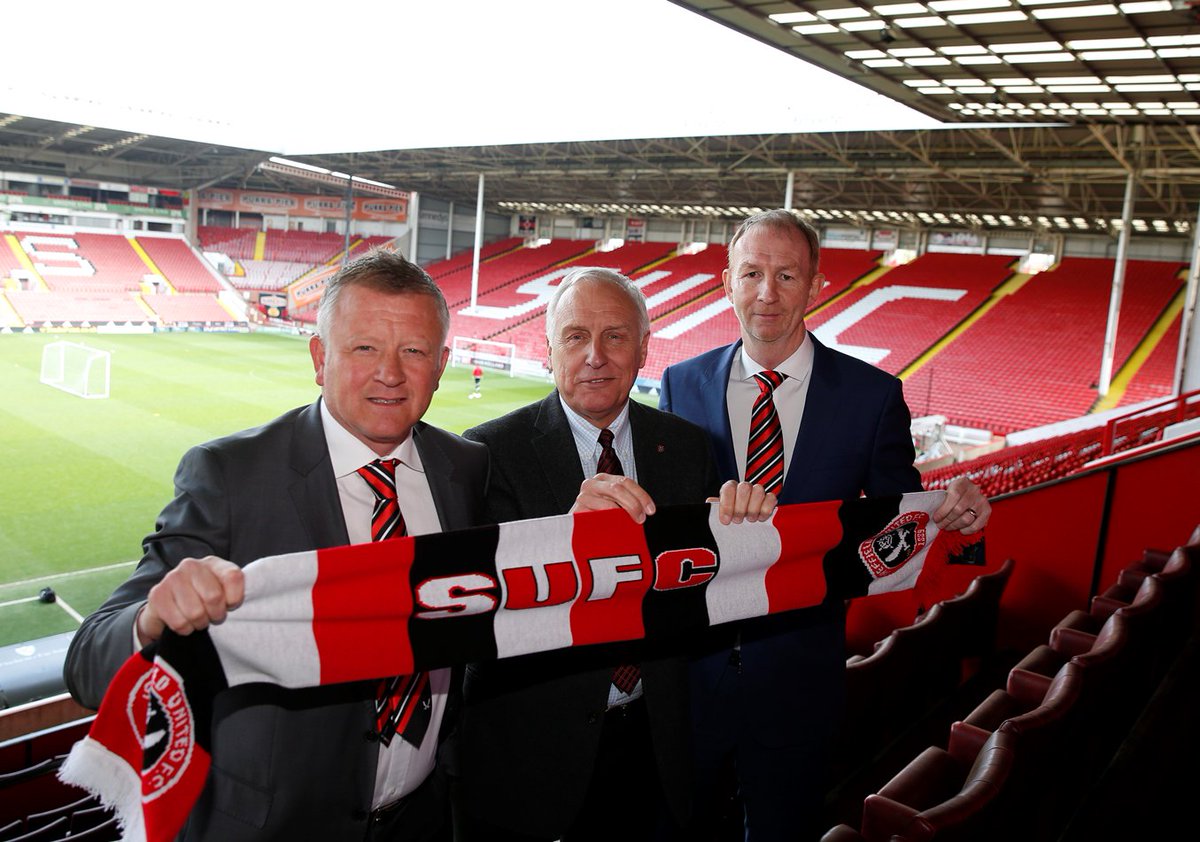
(Left to Right: Chris Wilder, Kevin McCabe, Alan Knill)
The past couple of days as a Sheffield United fan have been eventful, to say the least. At 10am yesterday, the club released a statement announcing the official departure of Nigel Adkins, the fanbase-splitting, platitude-spouting laser beam of positivity that has overseen a decidedly miserable season and guided Sheffield United to their worst final league position since the early 80's. When I first heard the news, I bristled and prepared myself to type out a blog bemoaning another knee-jerk sacking from a trigger happy board. Adkins had only served 11 months with The Blades, and I thought he deserved at least another 6. However, I feel that most of what I would have said was already stated in my similar blog from this time last year R.E: the sacking of Clough. Adkins' departure is a repeat of all the failings of a year ago, and I hope I'm not the only Sheffield United fan with a serious case of déjà vu.

One thing that is welcome is the club acting quickly and appointing a new helmsman barely 7 hours later, in contrast to the months (Weir) and weeks (Clough, Adkins) we have had to wait for recent managerial changes. The club released an official statement mid-afternoon. Our new manager is Chris Wilder, coming straight from winning the League 2 title at Northampton, along with his assistant, Alan Knill.

Fans of a certain age will know Wilder well. He is a former player, serving as an adequate defender for a number of years in the Dave Bassett era, and then being brought back briefly by Thompson in 1998. He is explicitly and unequivocally a Blade - He has lived in Sheffield his entire life, is often seen mixing with fans on away days, and was known to have sat in the stands during his playing days when not selected for the squad. As a further sweetener to the deal, he has appointed fan favourite and fellow Sheffield United fanatic Billy Sharp as the club captain. This has already scored him plenty of brownie points with a large section of the fan base.

If only life were so simple, and that was the end of it, as while there are plenty of positives to take from the last 48 hours, there are also many key points to be considered. The board have made it clear in recent years to our managers that anything but promotion will result in a sacking. Wilson was ousted 6 weeks after having Sheffield United top of the league table, Clough was gone after finishing 5th last year, and Adkins, though finishing 11th (An unmitigated disaster any way you look at it) was often merely a point away from the play-off places. If Wilder is to keep his job in a year's time, he will have to get Sheffield United into The Championship. No pressure then, old boy?

Wilder faces a number of problems.  Firstly, it has been made clear that he will have a lower budget than previous managers to play with. While some clubs (Burton, Rotherham, Yeovil) have proven that promotion in this division can be achieved on a small budget, it certainly helps to have more cash floating around. He will need to sign a handful of players on the cheap, then fill out the squad with loans and youth players. This, coupled with the promised clear out of this season's dead wood, will give the squad a major overhaul. That's a gamble. It may pay off. It may ruin the club. Either way, it's rolling the dice.

Chris Wilder breezed to last season's League 2 title as manager of Northampton

Wilder will also have to coax a positive reaction from the Sheffield United fan base, who are currently going through several shades of anger, frustration and apathy from the elongated stay in League 1 and the serial ennui of the drudgery of missing out on promotion and seeing managers and players consistently under perform. Adkins contentiously alluded to the toxic atmosphere at home games in his final interview as Sheffield United boss, and unpopular though it may sound, he's pretty much dead-on. To play in front of almost 20,000 people every 2 weeks and have them boo and jeer you most of the time, deserved or not, must be demoralising. The fans will give Wilder his due time, (and maybe a little more because he's a Blade,) but if Sheffield United aren't top 6 by Christmas, the atmosphere at Bramall Lane could start turning sour. That's going to be hard to overcome once it's set in.

Wilder has never managed in this division before, and it's uncertain how he'd be able to adapt to the higher quality level. His performance last season was exceptional - He managed Northampton to the League 2 title on 99 points, 13 above the best of the rest, achieving promotion at a canter. Recreating this in League 1 is almost impossible. Wilder will have expected to finish around 10th with Northampton next season. This is more than acceptable for a newly promoted side, but for Promotion-hungry Sheffield United? He'd be gone. Wilder therefore has to perform to an exemplary standard in his debut League 1 year just to meet expectations. It's a mammoth task for any manager.

All these issues need time and patience to address. Wilder will probably fail to reach the top 6 in his first season. That's not an indictment on him in any way; it's not a failed season if he doesn't get promoted at the first time of asking. He needs to bed in and develop. It's a gradual process, that needs time to fail as well as succeed. Unfortunately, as said earlier, the board will not see it that way, and Wilder will be sacked, thus completing the annual cycle at Sheffield United. As I said in my blog on Clough's sacking, there is only one common denominator in all this failure the past decade, and that's the board. I'll get behind the new manager, like every good fan should, but he's been given a poisoned chalice to drink from.

Monday, 25 January 2016

Negative Tactics Prove Costly For Adkins

Blades fans endured another disappointing performance on Saturday

Sheffield United’s 1-1 home draw to Swindon on Saturday was a frustrating afternoon of football for their fans to watch. This was a game The Blades were capable of winning, even dominating, but they failed to create enough chances and fell victim to a well-worked late equaliser from the visitors. The United faithful left Bramall Lane with a sour taste once more, as another side with little quality in their ranks earned a hard-fought point. That’s not to say Swindon played a poor game – Far from it. They had a solid tactical game plan and executed it well. They created one good chance all afternoon and scored from it. But yet again, Sheffield United dropped points at home in a game they should have put to bed before half time.

The Blades started brightly. Many United fans have been bemoaning the lack of forward-thinking, attacking football this season. The “rugby team” sideways passing, the frustration of yet another good chance passed back to the ‘keeper. Not so in the first half. Sheffield United started on the front foot, slicing passes through the middle, mixing it up with crosses from the flanks, winning balls in midfield. Their style was aggressive and pacey, yet controlled and precise. It was refreshing to see Adkins employing a direct strategy at home, and the mood was buoyant in the home stands from the early exchanges.

The penalty was a bonus from the initial period of pressure; Billy Sharp confidently struck the back of the net for his 7th goal in as many league games, and that seemed to signify the beginning of a comfortable home win for Sheffield United. Indeed, Sharp was close to securing a 2nd later on in the half, and had the cross he failed to convert carried a little less pace, The Blades may well have been 2-0 up at half time, cruising to victory. Games hinge on these knife-edge chances, and that one went begging, especially for a striker on top form. Such is the game of football. Nevertheless, Sheffield United went into half time a goal up, and had played well for it.

The second half was a different story, and showed a worrying trend in Adkins’ match tactics of late. Apart from a couple of early attempts on goal in the first few minutes, Sheffield United spent the 2nd half playing a more defensive style, sitting back and allowing Swindon to have time and space to carve out chances and take hold of the game. As a promotion chasing side, Sheffield United should be trying to put away home games such as these comfortably, scoring 2 or 3 and aiming for a clean sheet. It is unacceptable for a 1-0 lead in this kind of game to be deemed “job done” and have the manager instruct his squad to take the foot off the accelerator and wait out the final 30 minutes. Allowing the away side to come back into the game in the 2nd half is just asking for trouble, and The Blades were punished for their lack of creativity with an equalising goal in the 79th minute.

Billy Sharp's penalty capped off a bright start for Sheffield United, but was the only goal the home side managed all game.

While there will be questions raised about the poor level of defending leading up to Swindon’s goal, (McEveley clearly out of position, no one marking the attacker in space in the box, the goalkeeper left stranded,) a far more pressing issue is at heart here - Sheffield United should have been 2 or 3 up by that stage. The Blades have not kept a clean sheet for 6 games, mainly due to poor defensive displays, and therefore must go out with the intention of scoring more than 1 goal. Adkins was happy to settle for a 1-0 win by the hour mark, and made all his substitutions before Swindon’ goal. While the Baxter sub was a positive attacking move, bringing Flynn and Reed on showed a clear intention to play out the game and stifle any further Swindon attempts on goal. This would be a prudent decision if the team had a solid back four, but they don’t. Sheffield United have conceded more goals than any other side in the top half of the table, excluding Peterborough. It’s far too risky to rely on getting a clean sheet. Sheffield United must score more goals.

When the stifle tactic failed, Adkins had no more subs to use, no further rolls of the dice to try and change the game. Adams and Campbell-Ryce, a pacey pair of tricky forward players who would have chopped up the mediocre Swindon defence had to watch on as a negative, defensive Sheffield United side dropped points at home once again to a mid-table side they should have been thrashing.
Adkins did virtually the same thing a week previously away at Colchester. Sheffield United had a bright first half, scoring in the 20th minute and taking a 1-0 lead into half time. Colchester responded well in the 2nd half, and got a deserved equaliser to set up a potentially fiery final 30 minutes. But Adkins failed to see that the game was there for the taking, and worryingly seemed to be content with a point away at a side that had lost 9 of their previous 10 games. He set up to defend, failed to bring attacking players on to stretch the game, (however using Baxter as an impact sub which did help to link the midfield and the strikers,) and got a lucky win through a tap in from a corner in the 92nd minute. Again, this is a side Sheffield United need to be comfortably defeating, instead they barely won the game. Adkins rode his luck away at Colchester, and managed to win. He did the same at home to Swindon, and dropped 2 points. That is not a sustainable strategy if Sheffield United want to start winning games every week.

Many Blades fans think that the players are to blame here, that the squad lacks quality. I disagree, I believe the squad is good enough on paper to beat most of the teams in League 1, rather it is the tactics employed that are at fault. At home, the brief should be to win the game as early as possible. The best teams score early on 2 or 3 times, and then sit back. This is what Adkins did against Bradford just after Christmas. The game was won once Connor Sammon scored on the hour mark, a full 3rd of the match remaining. It was the best win of the season, and showed how well The Blades can perform when enabled to play a creative, aggressive style. December was the best month of the campaign so far, but already feels like a false dawn, and results such as Saturday’s are two steps back.

Sheffield United only just managed to beat relegation-threatened Colchester last week

Having said that, overall the results of late haven’t been disastrous. Only 1 loss in 8 league games is a good record, and The Blades have certainly overcome their September-November slump. But with Millwall, Peterborough and Southend all pushing for the coveted 6th spot, Sheffield United have a lot of competition to fight off to reach the play-offs, and Adkins can’t ride his luck for much longer. Dropping points as he did against Swindon on Saturday may come back to haunt him.

Sheffield United have still yet to play the entirety of the current top 6 once more this season. They will be the testing games, the games that are OK to nick 1-0, the games that are OK to only gain a point from. But if The Blades are to reach the play-offs, mid table/relegation sides such as Swindon on Saturday (and Blackpool tomorrow night,) need to be dispatched cleanly and efficiently. They will only achieve that with attacking, positive football, played over the full 90 minutes, and most importantly, scoring more goals!


Good form starts at home, and the next game at Bramall Lane will be against Wigan, a Championship team last season, FA Cup winners in 2013, and one of the best teams in the division. I hope Adkins realises the immense importance of that game, and sets up his squad and tactics to win convincingly. If Sheffield United play as negatively as they did against Swindon, I can see nothing but a demoralising home loss to a team that will be in the mix for the play-off final in 4 months. Sheffield United have contested some solid results against the big hitters this season, a home win against Coventry, a draw and a clean sheet away at Burton, and sensationally coming back from 3-0 down away at Wigan to snatch a point. All this will stand for nothing if they can’t win against lesser sides at home.

Thursday, 10 December 2015

Euro 2016 - The Rise Of The Middle Nations


The draw for France 2016 is on Saturday 5PM GMT

After 2 years, 266 matches and 694 goals, the qualification for Euro 2016 is now complete, and this weekend all eyes will be on the group draw for the finals in France next summer. This will be the biggest European championship yet, with more teams than ever before along with a new tournament format. Most of the usual suspects will be there; along with France qualifying automatically as hosts, world champions Germany topped a tough group in spite of historic defeats from Ireland and Poland, Spain atoned for their dismal World Cup by easing through in Group C, and England managed a 100% record to reach the finals with 10 wins from 10 games, while Italy, Portugal and Belgium all made it through as group winners. The only notable exception is The Netherlands, who embarrassingly finished 4th in Group A, not even making it to the play-offs. But what may cause an upset, and what made qualifying for Euro 2016 so entertaining is the success of the middle nations.

When UEFA announced in 2008 the expansion of the tournament to 24 teams, the idea was simple. More qualifying berths would enable the middle nations to find a place in the finals and create extra insurance for the established teams. Euro 2016 will be bigger and better, a reflection of the growth of the international game into new territories, and the dominance of European nations on the world stage. As it turned out, most of the smaller nations would have qualified for a 16 team tournament anyway, while some of the big hitters struggled, or failed to qualify at all. This has created a petit bourgeois of teams that are breaking new ground, giving an exciting new level to European international football. Nations that used to languish in the grey no-man's-land of pot 3 or 4 seeds - Too good to be cannon fodder, but not good enough to win the group - now have the ability to qualify. Some of these nations, Wales, Austria, and Slovakia for example, have been building up to this for a number of years, whereas some countries such as Iceland and Albania have come completely out of the blue. Next summer's competition will see 5 debutants and several teams that have only qualified for a handful of previous editions. This is an exciting prospect; small nations thrown in the mix with the big guns on uncharted territory.

The Euro 2016 group stage will allow for the 3rd place team from a group to qualify for the knock out stage. Out of 6 groups, the top 4 3rd placed teams will go through to the last 16. This has been criticised as being too lenient, it is said to create ambiguity, and could possibly create a scenario where a team already knows what they need to get to progress before kick-off. This could prove problematic if, for example, 2 teams were playing one another and both needed a certain result to go through, (which has happened before.) There are flaws in the structure of the 24 team format, and the lack of symmetry will inevitably cause some discussion over how fair the system is. On the other hand, this is a lifeline for smaller nations. This gives them a much better chance to qualify for the latter rounds, creating a more varied knock out stage than previous competitions. Getting out of the group stage is beneficial for middle nations, as this will increase their UEFA co-efficient, and thus improve their rank for seeding in qualification in future tournaments. In short, it creates a fairer system and enables easier upward mobility for smaller nations.

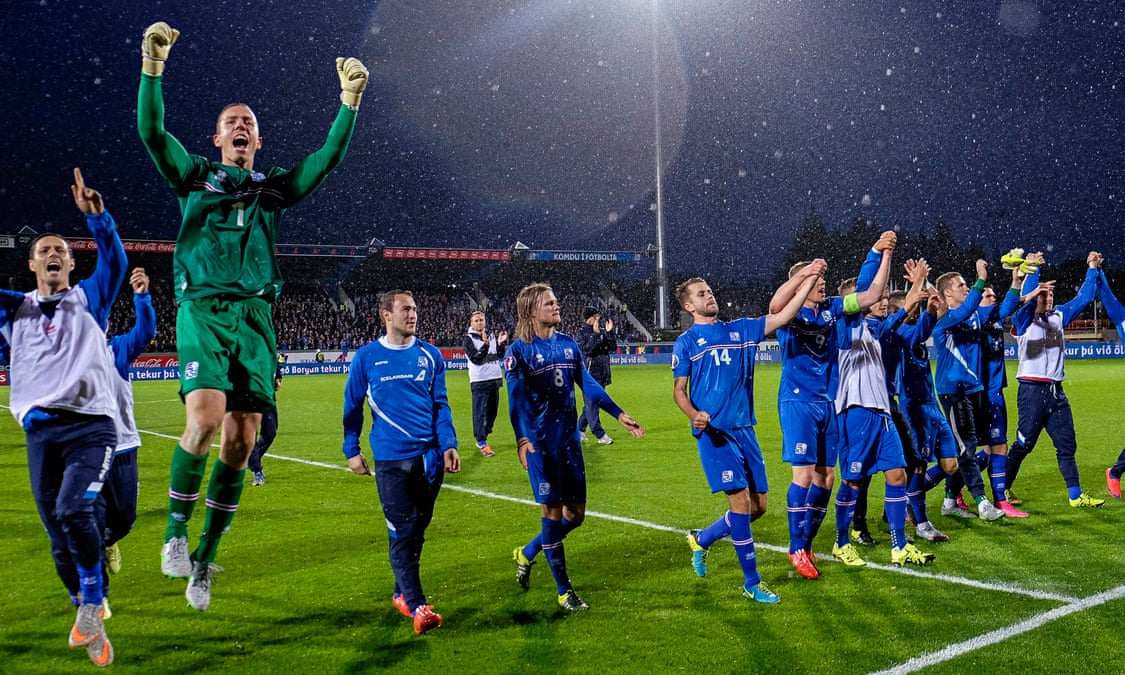
Iceland are one of 5 nations that are appearing in their first Euro finals

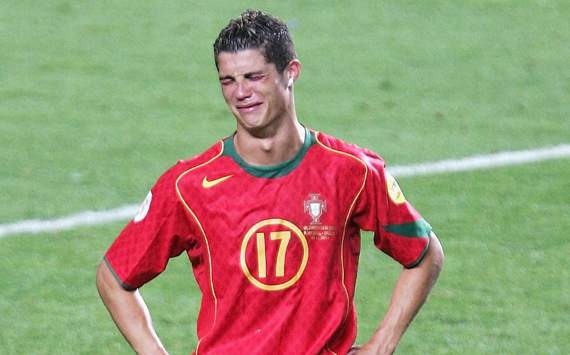
The shock Greek championship of 2004, the greatest upset in football history, showed us that even on the top level of the international stage, smaller teams can go all the way. The Greeks managed to scrape through the group stages after winning just 1 game, but soon built up momentum, overcoming some of the biggest European names to claim the trophy, including France, then reigning champions. The key to their success was a heavily defensive counter attacking style that drew 3 clean sheets, mixed with a dash of good luck, and the knowledge that most of Europe was behind them. Theirs was the ultimate underdog story, the stuff dreams are made of. One of the most iconic images of recent footballing history is the tears of a teenage Cristiano Ronaldo as the Greek players celebrated in ecstasy behind him. The 2004 tournament was meant to be his glory, his country's chance to shine on home turf, and he had that snatched away by the unlikely heroes of Greece's Piratiko. Could next summer produce such a big moment? If the tournament mirrors the qualification, it is possible, even inevitable, that Euro 2016 will have smaller nations defeating the established superpowers. They will have more representation in the latter stages, and they will play with no fear. Bigger nations will have all the pressure on them to succeed, and some may buckle under the strain.

It will be a tall order for any team to beat the likes of France, Germany or Spain. These 3 nations are the pre-tournament favourites, and you would expect that they would all reach at least the quarter-finals. Belgium are also strong contenders, but past those 4, there are no guarantees. England, Portugal and Italy are always good when they turn up, but they all have patchy tournament records. This leaves a lot of slots for smaller nations. There are the established B-grade European sides that will want to have their say - Czech Republic, Sweden, Croatia, Romania, Russia and the like, but there is a strong likelihood of 1 or 2 smaller nations getting a place in the last 8. Wales, Austria, Ireland, Poland, Slovakia, all part of the new European middle class, all capable of beating big sides and causing an upset.

Cristiano's Ronaldo's Portugal suffered at the hands of the Greeks in 2004.
Could 2016 provide a similar upset?

When we watch international tournaments, we want to see big games. We want to see household names facing off against one another for their country, proud titans with years of heritage like Germany, Italy and France battling for supremacy, and domestic superstars breaking records. We want golden shimmering games of football between nations that may not meet again competitively for another generation. But we also want underdogs. We want to see the smaller nations winning, we want Albania to pull off a scrappy 1-0 over Spain, we want Northern Ireland to top their group, and we want Hungary in the quarter finals.

Whatever the outcome of Saturday's draw may be, (as an Englishman, I need damage limitation. I just want us to get to the last 16, and not get dropped in another terrifying group like we did in Brazil. Football Gods, take note, please) it's not that far-fetched to suggest that 1 of these smaller nations, these underdogs that so brazenly and regularly knocked the stuffing out of the top level sacred cows in qualifying could do it again. As Greece so emphatically proved in 2004, winning European football's biggest prize and gaining a place in the continent's elite may not be as exclusive as once thought.