 |
| The draw for France 2016 is on Saturday 5PM GMT |
After 2 years, 266 matches and 694 goals, the qualification for Euro 2016 is now complete, and this weekend all eyes will be on the group draw for the finals in France next summer. This will be the biggest European championship yet, with more teams than ever before along with a new tournament format. Most of the usual suspects will be there; along with France qualifying automatically as hosts, world champions Germany topped a tough group in spite of historic defeats from Ireland and Poland, Spain atoned for their dismal World Cup by easing through in Group C, and England managed a 100% record to reach the finals with 10 wins from 10 games, while Italy, Portugal and Belgium all made it through as group winners. The only notable exception is The Netherlands, who embarrassingly finished 4th in Group A, not even making it to the play-offs. But what may cause an upset, and what made qualifying for Euro 2016 so entertaining is the success of the middle nations.
When UEFA announced in 2008 the expansion of the tournament to 24 teams, the idea was simple. More qualifying berths would enable the middle nations to find a place in the finals and create extra insurance for the established teams. Euro 2016 will be bigger and better, a reflection of the growth of the international game into new territories, and the dominance of European nations on the world stage. As it turned out, most of the smaller nations would have qualified for a 16 team tournament anyway, while some of the big hitters struggled, or failed to qualify at all. This has created a petit bourgeois of teams that are breaking new ground, giving an exciting new level to European international football. Nations that used to languish in the grey no-man's-land of pot 3 or 4 seeds - Too good to be cannon fodder, but not good enough to win the group - now have the ability to qualify. Some of these nations, Wales, Austria, and Slovakia for example, have been building up to this for a number of years, whereas some countries such as Iceland and Albania have come completely out of the blue. Next summer's competition will see 5 debutants and several teams that have only qualified for a handful of previous editions. This is an exciting prospect; small nations thrown in the mix with the big guns on uncharted territory.
The Euro 2016 group stage will allow for the 3rd place team from a group to qualify for the knock out stage. Out of 6 groups, the top 4 3rd placed teams will go through to the last 16. This has been criticised as being too lenient, it is said to create ambiguity, and could possibly create a scenario where a team already knows what they need to get to progress before kick-off. This could prove problematic if, for example, 2 teams were playing one another and both needed a certain result to go through, (which has happened before.) There are flaws in the structure of the 24 team format, and the lack of symmetry will inevitably cause some discussion over how fair the system is. On the other hand, this is a lifeline for smaller nations. This gives them a much better chance to qualify for the latter rounds, creating a more varied knock out stage than previous competitions. Getting out of the group stage is beneficial for middle nations, as this will increase their UEFA co-efficient, and thus improve their rank for seeding in qualification in future tournaments. In short, it creates a fairer system and enables easier upward mobility for smaller nations.
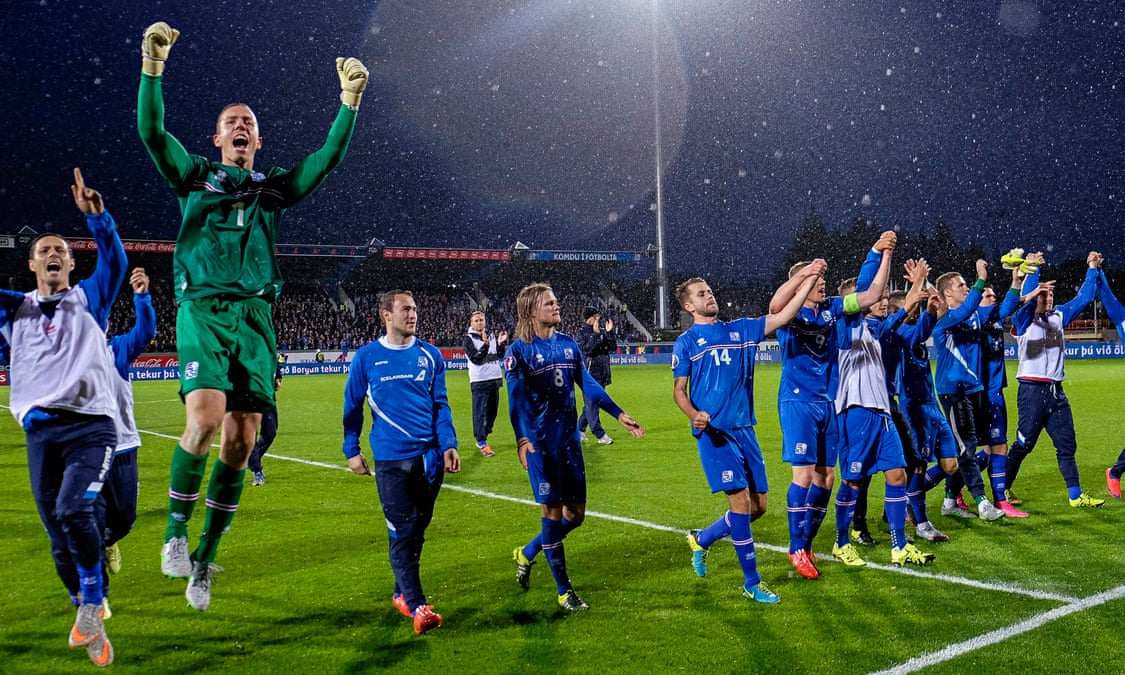 |
| Iceland are one of 5 nations that are appearing in their first Euro finals |
The shock Greek championship of 2004, the greatest upset in football history, showed us that even on the top level of the international stage, smaller teams can go all the way. The Greeks managed to scrape through the group stages after winning just 1 game, but soon built up momentum, overcoming some of the biggest European names to claim the trophy, including France, then reigning champions. The key to their success was a heavily defensive counter attacking style that drew 3 clean sheets, mixed with a dash of good luck, and the knowledge that most of Europe was behind them. Theirs was the ultimate underdog story, the stuff dreams are made of. One of the most iconic images of recent footballing history is the tears of a teenage Cristiano Ronaldo as the Greek players celebrated in ecstasy behind him. The 2004 tournament was meant to be his glory, his country's chance to shine on home turf, and he had that snatched away by the unlikely heroes of Greece's Piratiko. Could next summer produce such a big moment? If the tournament mirrors the qualification, it is possible, even inevitable, that Euro 2016 will have smaller nations defeating the established superpowers. They will have more representation in the latter stages, and they will play with no fear. Bigger nations will have all the pressure on them to succeed, and some may buckle under the strain.
It will be a tall order for any team to beat the likes of France, Germany or Spain. These 3 nations are the pre-tournament favourites, and you would expect that they would all reach at least the quarter-finals. Belgium are also strong contenders, but past those 4, there are no guarantees. England, Portugal and Italy are always good when they turn up, but they all have patchy tournament records. This leaves a lot of slots for smaller nations. There are the established B-grade European sides that will want to have their say - Czech Republic, Sweden, Croatia, Romania, Russia and the like, but there is a strong likelihood of 1 or 2 smaller nations getting a place in the last 8. Wales, Austria, Ireland, Poland, Slovakia, all part of the new European middle class, all capable of beating big sides and causing an upset.
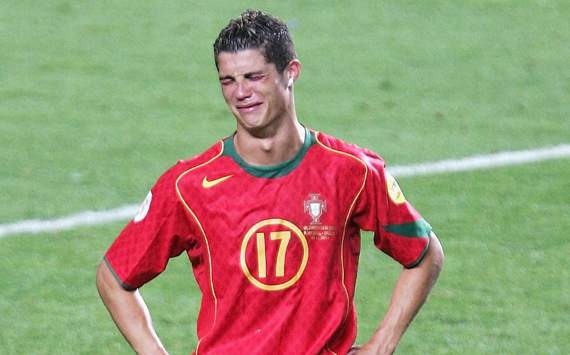 |
| Cristiano's Ronaldo's Portugal suffered at the hands of the Greeks in 2004. Could 2016 provide a similar upset? |
When we watch international tournaments, we want to see big games. We want to see household names facing off against one another for their country, proud titans with years of heritage like Germany, Italy and France battling for supremacy, and domestic superstars breaking records. We want golden shimmering games of football between nations that may not meet again competitively for another generation. But we also want underdogs. We want to see the smaller nations winning, we want Albania to pull off a scrappy 1-0 over Spain, we want Northern Ireland to top their group, and we want Hungary in the quarter finals.
Whatever the outcome of Saturday's draw may be, (as an Englishman, I need damage limitation. I just want us to get to the last 16, and not get dropped in another terrifying group like we did in Brazil. Football Gods, take note, please) it's not that far-fetched to suggest that 1 of these smaller nations, these underdogs that so brazenly and regularly knocked the stuffing out of the top level sacred cows in qualifying could do it again. As Greece so emphatically proved in 2004, winning European football's biggest prize and gaining a place in the continent's elite may not be as exclusive as once thought.

No comments:
Post a Comment